Relapse can feel sudden, confusing, and deeply discouraging. One day you feel stable and in control — the next, you’re right back in a behavior you promised yourself you’d never return to.
But here’s the truth most people never hear:
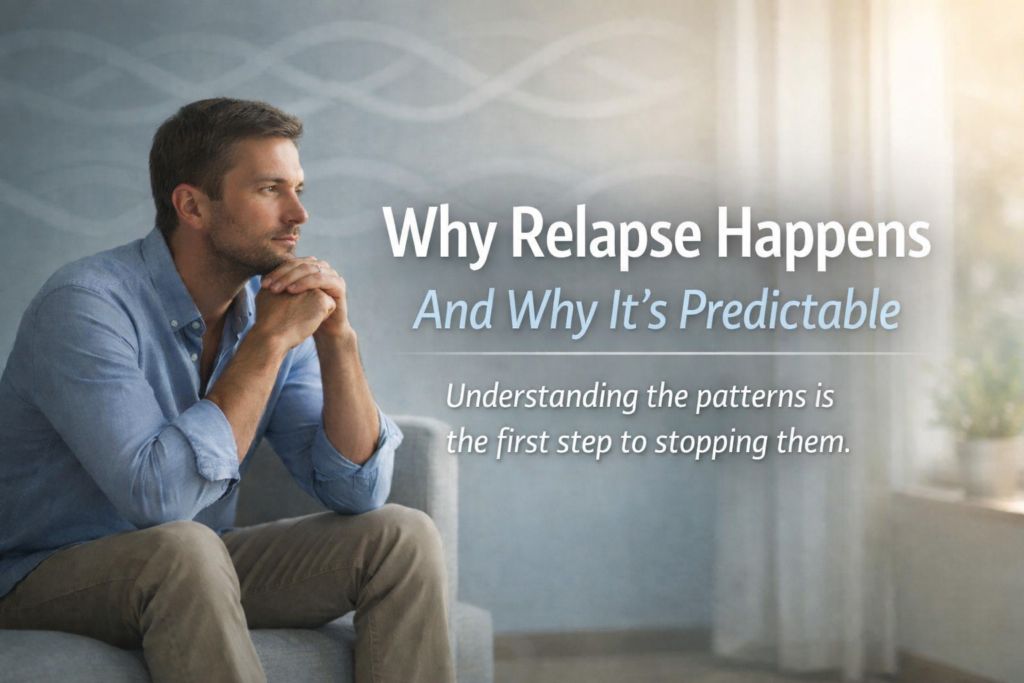
Relapse isn’t random.
And it’s rarely about weakness, lack of willpower, or failure.
Relapse happens for specific, predictable reasons. When you understand those reasons, relapse stops feeling mysterious — and starts becoming something you can anticipate, interrupt, and prevent.
This article breaks down why relapse happens, the patterns behind it, and how predictability can become your greatest recovery advantage.
What Is Relapse (Really)?
Relapse is commonly described as “going back” to an unwanted behavior after a period of change or recovery. That might include substance use, compulsive behaviors, pornography, binge eating, gambling, or other habits you’re trying to leave behind.
What’s often misunderstood is how relapse actually unfolds.
Relapse is not a single moment.
It’s a process — one that usually starts long before the behavior itself returns.
This is why people often say things like:
- “It came out of nowhere.”
- “I don’t even know what happened.”
- “I was doing fine… until I wasn’t.”
In reality, the warning signs were there — just unnoticed or misunderstood.
Why Relapse Happens: The Core Reasons
To understand why relapse happens, you have to look at the interaction between the mind, body, habits, and environment.
1. Psychological Triggers Build Quietly
Emotions play a central role in relapse. Stress, anxiety, loneliness, boredom, frustration, and shame all weaken self-regulation — especially when those emotions aren’t processed in healthy ways.
Unresolved emotional pain doesn’t disappear during recovery. It waits.
When emotional pressure builds without release, the brain naturally looks for relief, not long-term logic. Old behaviors once provided that relief, even if temporarily — which is why the urge can return so powerfully.
2. Habits Are Stored in the Brain — Not Erased
Many people believe that time alone “breaks” a habit. Neuroscience says otherwise.
Habits form strong neural pathways. When a behavior is repeated, the brain becomes efficient at executing it — especially under stress.
Even after months of progress:
- The pathway still exists
- The cue-response loop can still activate
- Stress lowers your ability to choose differently
This is why relapse doesn’t mean you lost progress — it means the old pathway was reactivated.
3. Environmental and Social Cues Matter More Than Motivation
Recovery doesn’t happen in a vacuum.
Certain places, times of day, devices, people, or routines can automatically trigger cravings. These cues often operate below conscious awareness.
For example:
- Being alone late at night
- Scrolling on a phone while tired
- Being around people who normalize the behavior
- Returning to stressful or chaotic environments
Motivation alone cannot override constant triggering environments — which is a major reason relapse happens even when someone really wants to change.
4. Biology Works Against You During Stress
Stress hormones like cortisol impair decision-making and impulse control. At the same time, the brain’s reward system becomes more sensitive to familiar dopamine hits.
This combination creates the perfect storm:
- Reduced self-control
- Increased cravings
- Short-term thinking
Under these conditions, relapse becomes a biological response, not a moral one.
Struggling to Break the Relapse Cycle?
If relapse keeps repeating despite your best efforts, professional support can make the difference.
Fixing You Now offers accessible, confidential therapy focused on relapse prevention and long-term recovery.
See affordable therapy options here
Why Relapse Is Predictable
Here’s where things shift from discouraging to empowering.
Relapse follows patterns — and patterns can be recognized.
The Three Stages of Relapse
Most relapses move through these stages:
1. Emotional Relapse
You’re not thinking about the behavior yet, but:
- You’re stressed, overwhelmed, or emotionally numb
- You stop using healthy coping tools
- You isolate or suppress emotions
2. Mental Relapse
The internal debate begins:
- “Just once won’t hurt”
- “I deserve relief”
- “I can control it this time”
You’re torn between wanting recovery and wanting escape.
3. Physical Relapse
The behavior happens.
By the time relapse becomes physical, it’s already been developing for days or weeks.
Thought Patterns That Predict Relapse
Certain mental habits reliably show up before relapse:
- All-or-nothing thinking (“I already messed up, so why try?”)
- Minimizing consequences
- Romanticizing past relief
- Harsh self-criticism
When these thoughts appear, relapse risk increases — not because you’re weak, but because the brain is shifting into automatic mode.
Common Relapse Triggers to Watch For
Recognizing triggers early is one of the most powerful prevention tools.
Internal Triggers
- Fatigue
- Emotional distress
- Loneliness
- Shame
- Boredom
External Triggers
- Easy access to the behavior
- Unstructured time
- Certain apps or devices
- Stressful relationships
- High-pressure situations
Triggers don’t force relapse — but they raise the odds unless addressed.
How Predictability Helps Prevent Relapse
If relapse were random, prevention would be impossible.
But because relapse is predictable, you can intervene before it reaches the breaking point.
1. Awareness Beats Willpower
People who maintain long-term change don’t rely on constant discipline. They learn to notice:
- Mood shifts
- Thought loops
- Behavioral drift
Early awareness gives you options.
2. Tools Interrupt the Pattern
Effective prevention tools include:
- Emotional regulation skills
- Thought-challenging exercises
- Urge surfing techniques
- Support check-ins
- Structured routines
These tools don’t eliminate urges — they buy you time, which is often all you need.
3. Support Reduces Isolation Risk
Relapse thrives in isolation. Accountability and connection weaken its power.
This doesn’t mean dependence — it means shared awareness.
Turning Awareness Into Action
Relapse prevention isn’t about perfection. It’s about response.
A practical prevention plan includes:
- Knowing your top triggers
- Identifying early warning signs
- Having a reset strategy for bad days
- Practicing self-compassion instead of shame
Progress isn’t measured by never slipping — it’s measured by recovering faster and learning sooner.
Frequently Asked Questions
Why does relapse happen even when someone is motivated?
Relapse happens because motivation alone cannot override stress, emotional triggers, habit conditioning, and biological responses. When pressure builds, the brain defaults to familiar coping pathways, especially under fatigue or emotional strain.
Is relapse a sign that recovery isn’t working?
No. Relapse does not mean recovery has failed. It indicates that a trigger or warning sign wasn’t recognized early enough. Recovery is a learning process, and relapse often provides valuable feedback for future prevention.
Can relapse be predicted before it happens?
Yes. Relapse is highly predictable when you know the warning signs. Emotional changes, mental justifications, increased stress, isolation, and routine breakdowns often appear days or weeks before a relapse occurs.
What are the early warning signs of relapse?
Common early signs include emotional numbness, irritability, poor sleep, increased cravings, rationalizing risky behavior, withdrawing from support, and neglecting healthy routines.
Why do people relapse after long periods of progress?
Even after long progress, old habit pathways remain in the brain. Stress, emotional overload, or environmental triggers can reactivate these pathways if coping tools aren’t actively maintained.
Does one relapse undo all progress?
No. Progress is not erased by a relapse. Skills learned, awareness gained, and time spent in recovery still matter. What’s important is how quickly you return to healthy behaviors.
How can understanding why relapse happens help prevent it?
Understanding why relapse happens allows you to identify triggers early, respond before urges escalate, and replace shame with strategy. Predictability turns relapse from a threat into a manageable risk.
Is relapse always physical behavior?
No. Relapse often begins emotionally or mentally before any behavior occurs. Emotional and mental relapse stages are critical opportunities for prevention.
Can relapse be prevented without extreme discipline?
Yes. Relapse prevention relies more on awareness, structure, and emotional regulation than strict willpower. Sustainable systems work better than constant self-control.
What should someone do immediately after a relapse?
The most effective response is to avoid self-criticism, identify what led up to the relapse, re-engage support, and return to healthy routines as soon as possible.
Final Thoughts: Relapse Is Predictable — and That’s Good News
Relapse doesn’t mean you’re broken.
It doesn’t mean recovery isn’t working.
And it certainly doesn’t mean you lack discipline.
It means your brain responded to stress using an old pathway.
Once you understand why relapse happens, you stop fearing it — and start managing it.
And when relapse becomes predictable, change becomes sustainable.
If you’re serious about long-term recovery, learning the patterns is not optional — it’s essential.
Get Professional Help Before Relapse Takes Over
Understanding why relapse happens is powerful — but you don’t have to handle it alone.
At Fixing You Now, we provide affordable addiction therapy designed to help you:
- Identify your personal relapse patterns
- Address emotional and mental relapse early
- Build practical coping strategies that work in real life
- Get consistent support without judgment or shame
View affordable addiction therapy pricing & plans