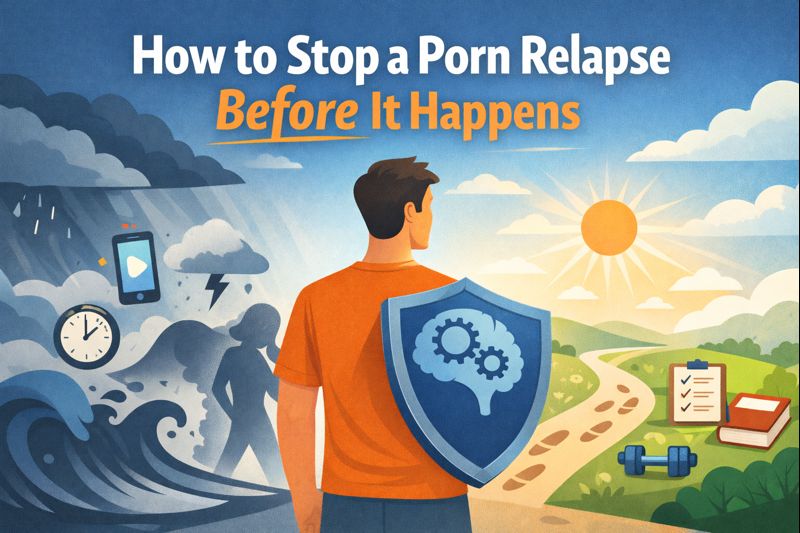
Porn relapses rarely come out of nowhere. They feel sudden because the final urge is intense—but the process that leads to relapse usually starts hours or even days earlier. Subtle changes in mood, routine, and thinking quietly stack up until resisting feels overwhelming.
If you’ve been searching for how to stop a porn relapse before it happens, the answer isn’t more willpower. It’s learning how relapse actually works—and interrupting it early.
This guide focuses on prevention, not shame. No fear tactics. No moral pressure. Just practical, real-world strategies that help you recognize warning signs, respond earlier, and regain control before urges take over.
Why Porn Relapses Happen (The Pattern Most People Miss)
Most people think porn relapses happen because of strong sexual urges. In reality, relapse is usually driven by emotional and cognitive patterns, not desire alone.
The Porn Relapse Cycle Explained
Most relapses follow this predictable sequence:
Trigger → Thought → Permission → Action
- Trigger: stress, boredom, loneliness, fatigue, anxiety
- Thought: “I deserve a break,” “Just for a minute,” “I’ll stop tomorrow”
- Permission: the internal yes that quietly decides the outcome
- Action: relapse feels automatic
The critical moment isn’t the urge—it’s the permission. By the time urges feel intense, the decision has often already been made upstream.
Emotional Triggers vs Sexual Urges
Research consistently shows that problematic pornography use is strongly associated with:
- Stress and emotional distress
- Loneliness and isolation
- Depression and anxiety
- Poor emotional regulation
Porn often functions as emotional regulation, not sexual expression. This explains why willpower alone fails—especially during exhaustion or stress.
The Pre-Relapse Window: Your Best Chance to Stop a Porn Relapse
Most porn relapses are set in motion 24–72 hours beforehand, during what can be called the pre-relapse window.
What Happens Before a Porn Relapse
During this window, people often experience:
- Increased mental bargaining (“I’ll deal with this later”)
- More isolation or withdrawal
- Excessive scrolling or screen use
- Disrupted sleep or routines
- Emotional numbness, irritability, or restlessness
- A growing “I don’t really care” mindset
These signs don’t feel urgent, which is why they’re ignored.
Why Early Intervention Works Better Than Fighting Urges
When urges are still low-intensity:
- The brain is more rational
- Behavior is easier to redirect
- Small actions can completely change the outcome
Once urges peak, you’re playing defense. The pre-relapse window is where relapse prevention actually works.
12 Practical Tips to Stop a Porn Relapse Before It Happens
These strategies focus on early response, not last-second resistance.
1. Identify Your Personal Porn Relapse Warning Signs
Every relapse has a preview. Track mood changes, isolation, late-night scrolling, or mental excuses. Awareness beats surprise.
2. Interrupt the First Sexualized Thought
The first thought matters more than the urge. Redirect immediately—stand up, switch tasks, or refocus attention before fantasy builds.
3. Change Your Environment Immediately
Environment beats motivation. Move rooms, go outside, or sit near other people. Physical distance creates mental distance.
4. Avoid Being Alone During High-Risk Hours
Most relapses happen late at night, early mornings, or after stressful days. Plan ahead to avoid being alone with devices during these windows.
5. Replace Dopamine Instead of Just Removing Porn
Your brain is seeking relief or stimulation. Effective replacements include:
- Exercise or walking
- Cold showers
- Music and movement
- Meaningful conversation
- Focused work
Removing porn without replacing dopamine increases relapse risk.
6. Use a 10-Minute Delay Rule
Urges rise and fall like waves. Commit to delaying action for 10 minutes. Most urges weaken significantly if not fed.
7. Create a Simple Urge-Response Script
Decide your response in advance.
Example: “This is a stress response, not a command. I’m choosing to move.”
8. Track Emotional Triggers, Not Just Days Clean
Streaks don’t reveal patterns. Track stress, sleep, loneliness, and overwhelm to prevent repeat cycles.
9. Reduce Easy Access Before You Need Willpower
Basic filters, blockers, and device boundaries create friction and break autopilot behavior.
10. Don’t Let a Slip Turn Into a Full Porn Relapse
A slip is a mistake. A relapse spiral is shame-fueled continuation. Respond with correction, not self-attack.
11. Build a Daily Structure That Reduces Idle Time
Unstructured time is one of the biggest relapse risk factors. Even a simple routine dramatically lowers temptation.
12. Have an Emergency Plan for Strong Porn Urges
When urges spike, don’t decide—execute.
Example:
- Leave the room
- Put the phone down
- Walk for 5 minutes
- Cold water on face
What to Do If You’re Feeling Close to Relapsing Right Now
Immediate Steps (Next 30 Minutes)
- Change location immediately
- Put distance between you and devices
- Engage your body (walk, stretch, cold water)
- Name the emotion driving the urge
- Delay any decision for 10 minutes
Feeling stuck in the relapse cycle?
You don’t have to handle this moment alone. We offer a confidential therapy session to help you stabilize, understand your triggers, and plan your next steps—without shame or pressure.
Book your session with a friendly therapist now
What Not to Do
- Don’t white-knuckle it
- Don’t shame or attack yourself
- Don’t negotiate with the urge
- Don’t think about forever—focus on now
Long-Term Habits That Make Porn Relapses Less Likely
Sleep
Poor sleep weakens impulse control and emotional regulation.
Stress Management
Chronic stress is one of the strongest relapse triggers. Regular decompression prevents pressure from building.
Accountability
Relapse thrives in secrecy. Trusted accountability reduces isolation and increases follow-through.
Purpose
Meaningful work, relationships, and growth reduce the brain’s need for escape.
Why Progress Beats Perfection
Recovery isn’t about never struggling. It’s about:
- Shorter relapses
- Earlier awareness
- Faster recovery
Progress compounds.
If progress feels harder than it should be, guided support can make a difference.
You’re welcome to book a free therapy session—no obligation, just a conversation.
Schedule a free session
Final Thoughts: Porn Relapse Prevention Is a Skill, Not a Moral Test
Relapse prevention isn’t about proving discipline or worth. It’s a learnable skill built through awareness, preparation, and repetition.
Normalize setbacks without normalizing quitting. Consistency beats intensity. Progress beats perfection.
Each time you notice patterns earlier or respond faster, you’re strengthening the skill that makes relapse less likely over time.
Frequently Asked Questions About Porn Relapse Prevention
How can I stop a porn relapse before it happens?
Porn relapses usually begin hours or days before urges peak. The most effective way to stop a relapse is to recognize early warning signs—such as stress, isolation, or disrupted routines—and intervene early with environmental changes and delay strategies.
Why do porn relapses feel sudden?
They feel sudden because the final urge is intense, but the decision often forms earlier through emotional triggers and mental bargaining.
Is a slip the same as a porn relapse?
No. A slip is a brief mistake followed by correction. A relapse usually involves continued use fueled by shame or hopelessness.
Does willpower help prevent porn relapse?
Willpower alone is unreliable, especially during stress or fatigue. Systems and preparation are more effective than self-control.
How long do porn urges usually last?
Most urges peak and fade within 10–20 minutes if not acted on. Delaying and changing the environment significantly reduces intensity.
Can stress cause porn relapse?
Yes. Stress is one of the most common relapse triggers because the brain seeks fast relief.
What should I do if I feel like I’m about to relapse?
Immediately change location, step away from devices, engage your body, and delay any decision. Focus on the next safe action.
Is porn recovery about perfection?
No. Recovery is about progress—shorter relapses, faster recovery, and earlier awareness over time.