Virtual therapy for problem gambling provides private, accessible, and flexible treatment for individuals struggling with gambling addiction. It allows people to receive evidence-based therapy from licensed professionals without needing to travel to a clinic.
The main benefits include:
- increased privacy and reduced stigma
- access to specialized gambling addiction therapists
- flexible scheduling
- lower overall treatment costs
- effective evidence-based therapy delivered online
- faster access to support during relapse risk
For many people, virtual therapy removes the barriers that prevent them from seeking help for Gambling Disorder.
What Is Problem Gambling?
Problem gambling refers to persistent and harmful gambling behavior that disrupts finances, relationships, and mental health. In clinical settings it is diagnosed as Gambling Disorder, a recognized behavioral addiction that can be treated through therapy, support groups, and behavioral interventions.
What Is Virtual Therapy for Gambling Addiction?
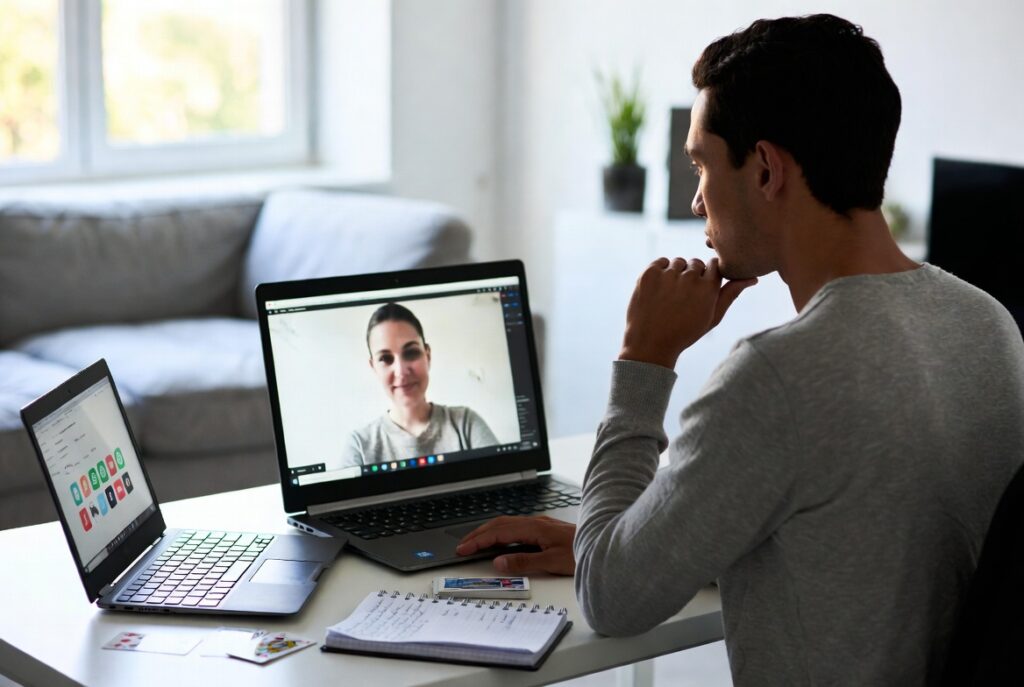
Virtual therapy (also called online therapy or teletherapy) is professional counseling delivered through secure video sessions, messaging platforms, or online treatment portals.
Instead of visiting a clinic, individuals connect with therapists remotely using a computer, tablet, or smartphone.
For gambling addiction treatment, therapists commonly use evidence-based methods such as:
- Cognitive Behavioral Therapy
- Motivational Interviewing
- relapse prevention therapy
- behavioral addiction counseling
These approaches help individuals understand their triggers, change harmful thinking patterns, and develop strategies to avoid relapse.
Key Benefits of Virtual Therapy for Problem Gambling
1. Privacy Makes It Easier to Seek Help
Many people struggling with gambling addiction avoid treatment because of embarrassment or fear of judgment.
Virtual therapy allows clients to attend sessions privately from home or another secure location. Without a physical waiting room or clinic visits, individuals can seek help discreetly.
This increased privacy often removes the psychological barrier that delays treatment.
2. Access to Specialized Gambling Therapists
Qualified gambling addiction therapists are not available everywhere. Many small towns or rural areas have limited access to behavioral addiction specialists.
Virtual therapy removes geographic limitations by allowing individuals to connect with specialists regardless of location.
This means a person living in a remote area can receive the same level of care available in major cities.
3. Flexible Scheduling Supports Consistency
Consistency plays a critical role in addiction recovery.
Traditional therapy requires travel and fixed appointment times, which can be difficult for people balancing work, family, or other responsibilities.
Virtual therapy offers more scheduling flexibility, including:
- early morning sessions
- evening appointments
- lunchtime sessions
This flexibility increases the likelihood that individuals will stay engaged with treatment.
4. Evidence-Based Therapy Works Online
A common concern is whether online therapy is as effective as in-person counseling.
Research shows that structured treatments such as Cognitive Behavioral Therapy (CBT) can be delivered effectively through video sessions.
Therapists can still help clients:
- identify distorted beliefs about gambling
- understand emotional triggers like stress or boredom
- build coping strategies for urges
- develop relapse prevention plans
The therapeutic relationship between client and therapist — a key factor in successful outcomes — can be developed effectively through regular online sessions.
5. Lower Financial Barriers
Problem gambling often leads to financial stress. The additional costs associated with in-person therapy — transportation, parking, and time away from work — can make treatment harder to maintain.
Virtual therapy reduces many of these expenses.
Potential financial advantages include:
- fewer travel costs
- lower provider overhead
- reduced time off work
- access to sliding-scale pricing or insurance coverage
Lower costs make it easier for individuals to continue therapy long enough to support long-term recovery.
6. Therapy Integrates Into Daily Life
Recovery from gambling addiction occurs in everyday decisions and behaviors, not just during therapy sessions.
Virtual therapy platforms often include additional recovery tools such as:
- secure messaging with therapists
- digital journaling
- progress tracking
- goal setting
These tools help individuals remain engaged in recovery between sessions.
7. Faster Support During High-Risk Moments
Cravings and relapse risk do not always occur at predictable times.
Some virtual therapy services allow clients to contact their therapist between sessions through secure messaging or quick check-ins.
Access to support during vulnerable moments can help prevent a temporary urge from turning into a full relapse.
Who Benefits Most From Virtual Therapy?
Virtual therapy may be particularly helpful for individuals who:
- live far from gambling addiction specialists
- prefer privacy when seeking treatment
- have demanding work schedules
- feel uncomfortable visiting a physical clinic
It can also complement peer support groups such as Gamblers Anonymous and financial counseling.
Key Takeaways
Virtual therapy has become one of the most accessible ways to treat problem gambling.
Its major advantages include:
- greater privacy and anonymity
- access to specialized therapists anywhere
- flexible scheduling
- lower treatment costs
- effective evidence-based care delivered online
By removing many common barriers to treatment, virtual therapy helps more people begin and maintain recovery from gambling addiction.
Expert Insight: Why Virtual Therapy Works for Gambling Addiction
Mental health professionals increasingly recognize that virtual therapy can remove many of the barriers that prevent people from seeking help for Gambling Disorder. When therapy becomes easier to access, individuals are more likely to start treatment and remain consistent with sessions. Evidence-based approaches such as Cognitive Behavioral Therapy can be delivered effectively through secure video sessions, making online treatment a practical and effective option for many people recovering from problem gambling.
Getting Help for Problem Gambling
Professional support can make a significant difference in overcoming gambling addiction.
At Fixing You Now, we provide confidential virtual therapy designed specifically for individuals struggling with problem gambling.
Our treatment approach focuses on evidence-based therapy, personalized recovery planning, and flexible online sessions.
If gambling is affecting your finances, relationships, or mental health, reaching out for support may be the first step toward lasting change.
Sources
- National Council on Problem Gambling
- American Psychiatric Association
- National Institutes of Health research on telehealth and behavioral therapy
- Gamblers Anonymous recovery resources